
Explore our world-class mountaineering library, apply for one of our grants, and dig in to your member resources.


Introduction to Alpine Climbing
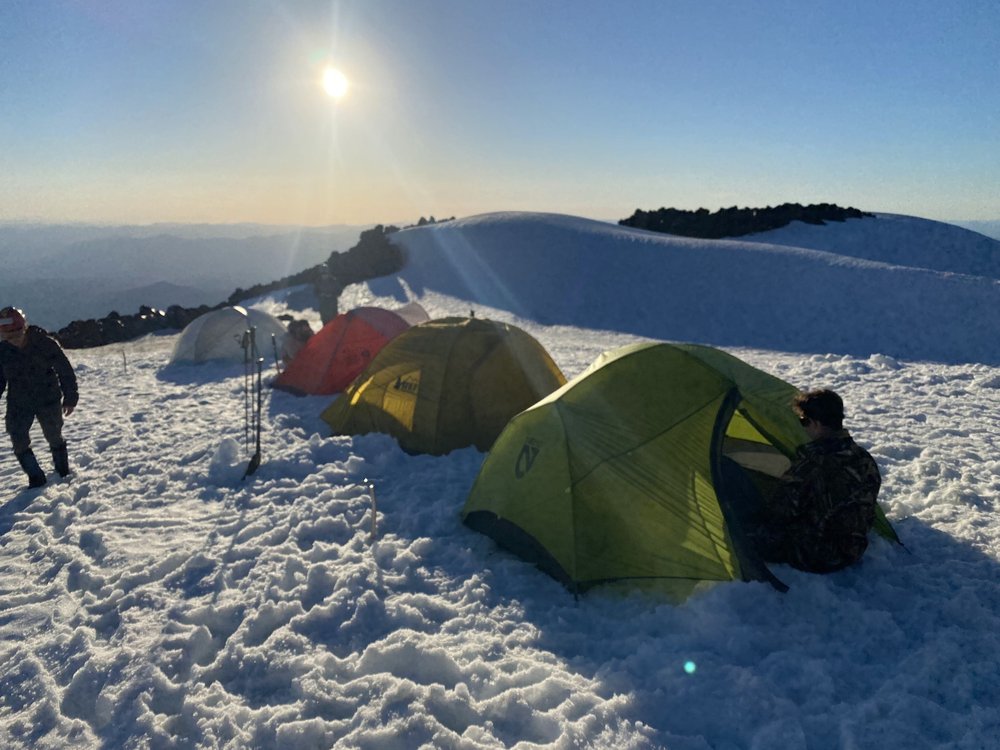
Introduction to Alpine Climbing
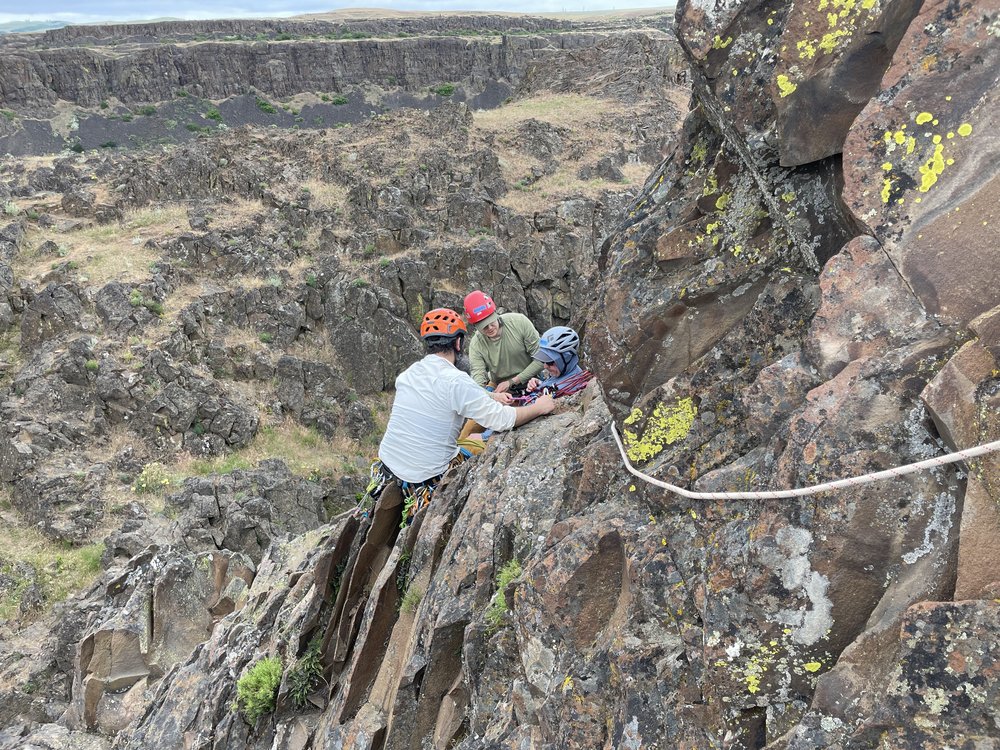
Introduction to Alpine Climbing
Are you an experienced hiker and backpacker ready to take your outdoor adventures to new heights? The Introduction to Alpine Climbing (IAC) course is an immersive, skills-based program designed to equip you with the essential techniques and knowledge needed to safely tackle the iconic peaks of the Pacific Northwest—from snow-covered summits like Mt. Adams and Mt. St. Helens to challenging rock faces as a key member of a climbing team.
In this course, you’ll engage in up to six days of focused, hands-on training, typically spread over three weekends. Our curriculum blends fundamental technical sessions with real-world field experiences, emphasizing critical skills such as knot tying, harness and helmet fitting, belaying, rappelling, and fixed line usage. You’ll also refine your climbing movement, learn effective nutrition and conditioning strategies, and boost your outdoor self-management and navigation techniques—all while practicing Leave No Trace principles. Whether you’re preparing to climb as a follower on a top rope or learning to execute safe descents on varied terrain, IAC is structured to meet you where you are and elevate your abilities.
Our teaching philosophy is rooted in student-centered, experiential learning. We believe that the best way to learn is by doing, which is why the majority of instruction takes place in realistic outdoor settings. You’ll receive continuous, informal feedback from experienced team leaders who celebrate your progress while providing personalized guidance. The course is designed not only to develop technical proficiency but also to build the critical decision-making, teamwork, and situational awareness needed to navigate the mountains confidently.
We are committed to creating a supportive, inclusive, and respectful learning environment where every participant is valued. IAC proudly welcomes individuals of all gender identities, sexual orientations, and backgrounds. As you work alongside fellow outdoor enthusiasts, expect engaging dialogue, mutual support, and a shared passion for alpine adventure.
For those seeking an even deeper experience, an optional Alpine Experience Extension offers an additional two days of training, including an overnight alpine snow camping session that simulates the physical and logistical challenges of high-altitude climbs—further enhancing your mountaineering skills and preparing you for future summits.
Join us on this transformative course to not only master the fundamentals of alpine climbing but also to discover the confidence, resilience, and camaraderie that come with conquering the great outdoors.
Enrollment is open to Mazama members and non-members. Mazama members pay reduced tuition and receive priority admittance.
Course Objectives
When you have completed the Introduction to Alpine Climbing course, you will be able to:
- Demonstrate proficiency with general mountaineering skills.
- Demonstrate foundational technical climbing skills for rock up to low 5th class (5.0 – 5.4).
- Demonstrate foundational technical climbing skills for moderately steep snow.
- Demonstrate proficiency with basic climbing knots.
- Demonstrate proficiency with top rope and quick belay methods.
- Demonstrate proficiency with rappelling methods on rock and snow anchors.
- Demonstrate fixed-line travel and running-belay skills.
Course Objectives: Alpine Experience Extension
When you have completed the Introduction to Alpine Climbing optional Alpine Experience course extension, you will be able to:
- Demonstrate proficiency and working knowledge of general mountaineering and alpine snow camping skills.
- Demonstrate knowledge of preparing and packing for an alpine climb.
- Demonstrate knowledge of Leave No Trace principles.
- Demonstrate knowledge of preparing for a Mazama A or B climb.
Course Structure
The Introduction to Alpine Climbing (IAC) course requires a commitment of up to eight days of training, including six days of required training and an optional two day alpine experience field session. The exact schedule will vary by team.
Core Course
Fundamental Skills Session (1 day): This session introduces the course structure, instructors, classmates, and essential gear. Participants will begin learning and practicing technical skills in preparation for outdoor field sessions including, knots, belaying, and rappelling.
Adventure Hike Field Session (1 day): This is an opportunity to implement and practice the skills learned at the Fundamental Skills Session in rugged hiking terrain. Objectives of this field session include team-building, pace management, physical fitness for climbing, and ample skills practice. This session will have an emphasis on rappelling.
Rock Skills Field Session(s) (2 days total): Two days of instruction and practice of rock climbing skills on outdoor rock. These two days of training typically occur on a single weekend (with group camping), or may be broken up into two individual field session days. This depends on the specific team.
Snow Skills Field Session(s) (2 days total): Two days of outdoor learning and practice of snow climbing skills on realistic snow climbing terrain. These two days of training typically occur on a single weekend (with group camping or lodging), or may be broken up into two individual field session days. This depends on the specific team.
Optional Alpine Experience Course Extension
The alpine experience operates as an optional extension with separate prerequisites, primarily focused on physical fitness. Students interested in participating must complete a parallel application alongside their IAC course application. Tuition for this extension is separate from the primary IAC course.
Alpine Experience Field Session (2 days): This field session offers an overnight alpine experience in realistic snow climbing terrain. Participants will learn and practice essential alpine skills, including:
- Alpine snow camping
- Packing an alpine backpack
- Planning nutrition for extended climbs
- Preparing for high-elevation climbing
- Layering effectively for variable conditions
- Navigating early or nighttime starts and hiking in the dark
This session simulates the physical and logistical challenges of an alpine climb. As an added goal, the course may include a summit attempt (e.g., Mt. Adams), conditions permitting.
A Supportive & Inclusive Learning Community
At Introduction to Alpine Climbing (IAC), we are committed to fostering a learning environment where all participants feel welcomed, respected, and supported. We recognize that alpine climbing is not just about technical skills—it’s about teamwork, communication, and shared experiences in the mountains. This course is proudly LGBTQ+ friendly and embraces individuals of all gender identities, backgrounds, and life experiences. We honor each person’s pronouns and are dedicated to creating a space where diversity is valued.
Respect, encouragement, and mutual support are core to our team-based approach. Every participant contributes to a positive and inclusive culture by practicing respectful communication, supporting one another through challenges, and embracing learning as a shared journey. Whether you’re new to alpine climbing or expanding your skills, you belong here.
IAC Prerequisites and Equipment
Course Prerequisites
The Introduction to Alpine Climbing (IAC) course is designed for experienced hikers and backpackers looking to build technical alpine and rock climbing skills. This course does not teach the fundamentals of hiking, backpacking, or camping, nor is it a physical fitness training program. Instead, it assumes that students are already comfortable in outdoor environments and can independently manage themselves in the backcountry.
Participants should enter the course with the ability to self-regulate in varied outdoor conditions—handling their own layering, nutrition, packing, and basic outdoor problem-solving. This is essential for both the required training sessions and the optional Alpine Experience Course Extension, which builds upon general backpacking skills to introduce alpine camping and snow travel.
To ensure students are prepared for the demands of the course, prospective participants should have:
- A foundational understanding of the 10 Essentials and the ability to use them in practice.
- The ability to self-manage nutrition, hydration, and personal well-being over a full day in the outdoors, including minor first aid, blister prevention, and blister care.
- Comfort navigating uneven, moderately exposed terrain and working at heights.
- Recent outdoor experience with backpacking, hiking, or related activities. At least some experience with overnight camping in backcountry or semi-remote environments.
- While specific numbers are not required, sufficient experience may include:
- Regular day hikes in the past year, including routes with at least 3 miles in length with 1,500 feet of elevation gain at a moderate pace (2 mph) carrying a pack weighing at least 20 lbs:
- At least 25–30 miles of hiking in the past year (varied terrain, elevation gain), OR
- At least 100–120 miles of hiking in the past four years, OR
- Four or more multi-day backpacking trips (e.g., weekend trips with a loaded pack) within the past two years.
Additional Prerequisites for the Alpine Experience Course Extension
Students interested in the optional Alpine Experience Extension should have additional fitness and outdoor experience, as this field session extends general backpacking into a more demanding alpine environment. Participants must be able to:
Complete a moderate hike with the following minimums:
- 3 miles in length
- 2,800 feet of elevation gain
- Completed within 3 hours
- Carry a pack weighing at least 30 lbs or 25% of body weight (whichever is greater), up to a max of 45 lbs.
Be comfortable with high alpine exposure, including Class 4 or 5 terrain with potentially hundreds of feet of exposure.
Required Equipment
All climbing safety equipment must be CE or UIAA rated and in good condition. To prevent mix-ups, it’s recommended to mark personal gear, such as carabiners, using durable methods like electrical tape or nail polish on metal surfaces. Avoid applying markers or paints to soft goods (e.g., slings, harnesses) as certain chemicals may degrade the material over time. For best results, research gear marking techniques that balance visibility, durability, and material safety.
Climbing Equipment
- Helmet: UIAA/CE-approved climbing helmet
- Harness: UIAA/CE-approved climbing harness with a belay loop
- Runners & Slings: One 48” (120 cm) sewn nylon runner (22 kN minimum load rating) – must have at least one nylon runner, One 48” (120 cm) sewn Dyneema sling (22 kN minimum load rating) – may use two nylon runners instead of one nylon + one Dyneema sling
- Carabiners: Three non-locking carabiners (medium to large size; no mini carabiners), One large locking HMS/Pear carabiner, One locking carabiner with triple-action function (medium to large size), Three locking carabiners (small to medium size), One small locking carabiner (or extra medium-sized one)
- Belay/Rappel Device: Tube-style device (e.g., ATC, Verso, or similar) – must accept two rope strands
- Prusik Cord: 25 feet of 6mm load-rated cord (will be cut to length in class)
Personal Gear
- Footwear: Required: Sturdy shoes or boots suitable for hiking with a weighted pack, Optional: Rock climbing shoes (not required for this course)
- Clothing & Sun Protection: Clothing appropriate for hiking in Pacific Northwest weather (includes sun protection, wet/cold weather gear), Sun protection (sunglasses, sunscreen, and UV-protective clothing)
- Backpack & Essentials: Backpack: Minimum 35L (Sufficient to care rope, and personal gear. Note: The rope does not need to be carried inside the pack; strapping it to the outside is a common option.), Ten Essentials, Compass (smartphone compass app acceptable), Rain gear
- Optional Items: Gaiters, Hiking poles
Rent or Buy for Snow Skills Field Session
- Mountaineering boots (3- or 4-season, crampon-compatible)
- Ice axe
- Crampons (must be properly fitted to boots)
Equipment for Alpine Experience Field Session
- Additional Personal Gear: Sleeping bag (20°F or colder recommended), Sleeping pad, Tent (can be shared with others)
- Rent or Buy: Mountaineering boots (3- or 4-season, crampon-compatible), Ice axe, Crampons (must be properly fitted to boots), Backpack: Internal-frame, 50L or larger recommended
| FUNDAMENTAL SKILLS | ROCK SKILLS | SNOW SKILLS |
| Proper Equipment Selection and Usage | Belaying | Running-Belay and Basic Glacier Travel |
| Fitness for Mountaineering | Rappelling | Self-Arrest with an Ice Axe |
| Weather Conditions | Proper Communication & Signals | Increase Awareness of Avalanche Danger & Risks |
| Leave No Trace Principles | Traveling on a Fixed Line | Preparing for an Alpine climb |
Upcoming Class Information
Course Details
When do applications open?
Applications for 2026 IAC teams open on a rolling basis. More details to come as each team schedules are finalized.
Schedule
Early IAC teams generally get underway in late spring and later IAC teams finish in late fall, though each team's schedule is independent.
Time Commitment/Duration
Time Commitment: High–IAC requires full commitment to four weekends of activity.
Duration: Moderate–IAC takes place over a maximum period of eight weeks.
Tuition
Tuition is $575 for Mazama members and $675 for non-members.
Optional Course Extension: Tuition is $80 for current IAC students.
You can join the Mazamas before applying to IAC to receive the reduced rate and enjoy immediate membership benefits. Standard membership is $88 annually.